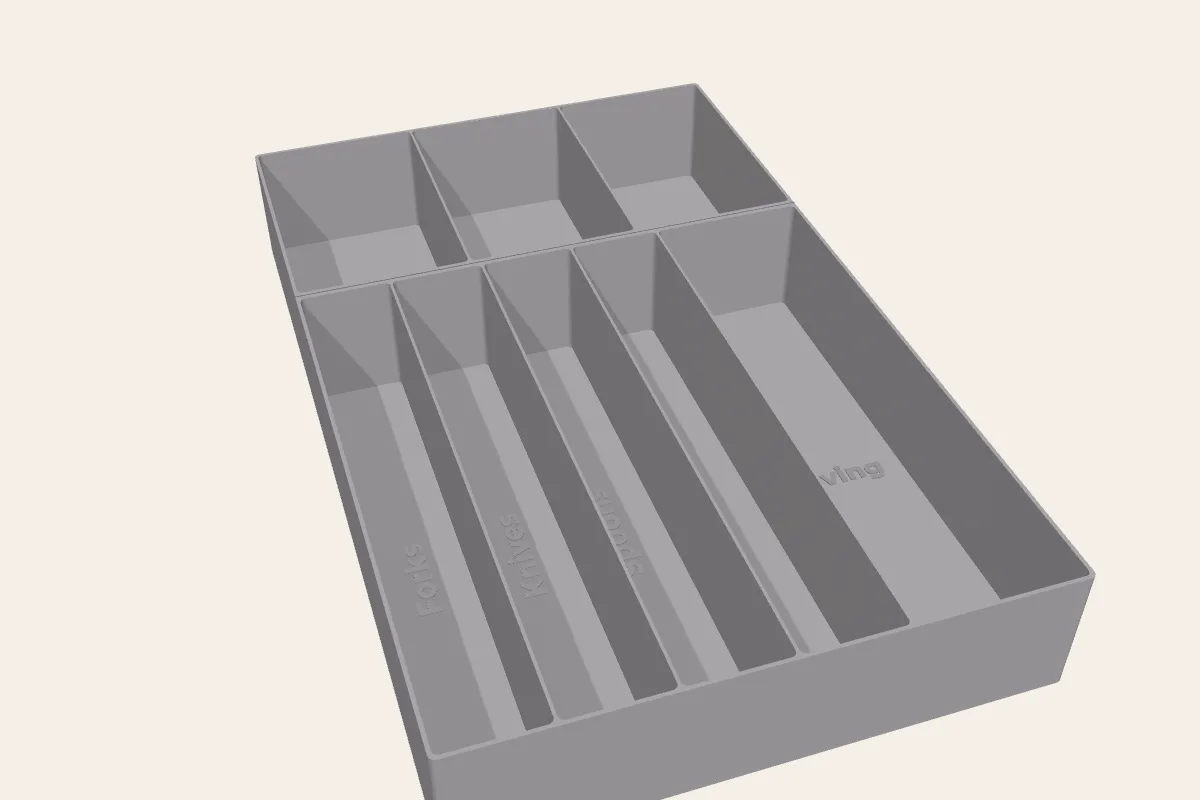
Utensil drawer (15″ cabinet)
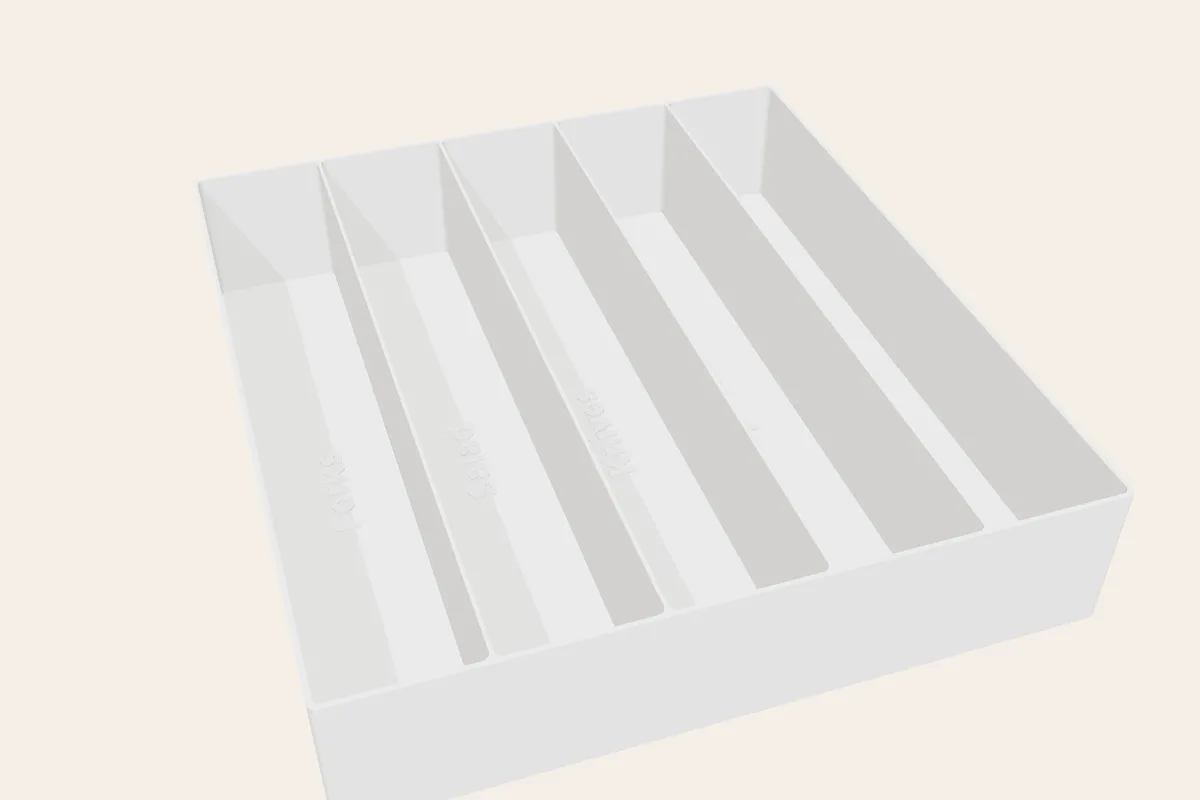
The classic: flatware lanes, a wide bay for serving pieces and a row of bays at the back. Two locking pieces.
Open this layout in the designer →Kitchen drawers vary from cabinet to cabinet, so off-the-shelf trays rarely fit. Design one around your drawer and the things you actually keep in it.
Example layouts
The classic: flatware lanes, a wide bay for serving pieces and a row of bays at the back. Two locking pieces.
Open this layout in the designer →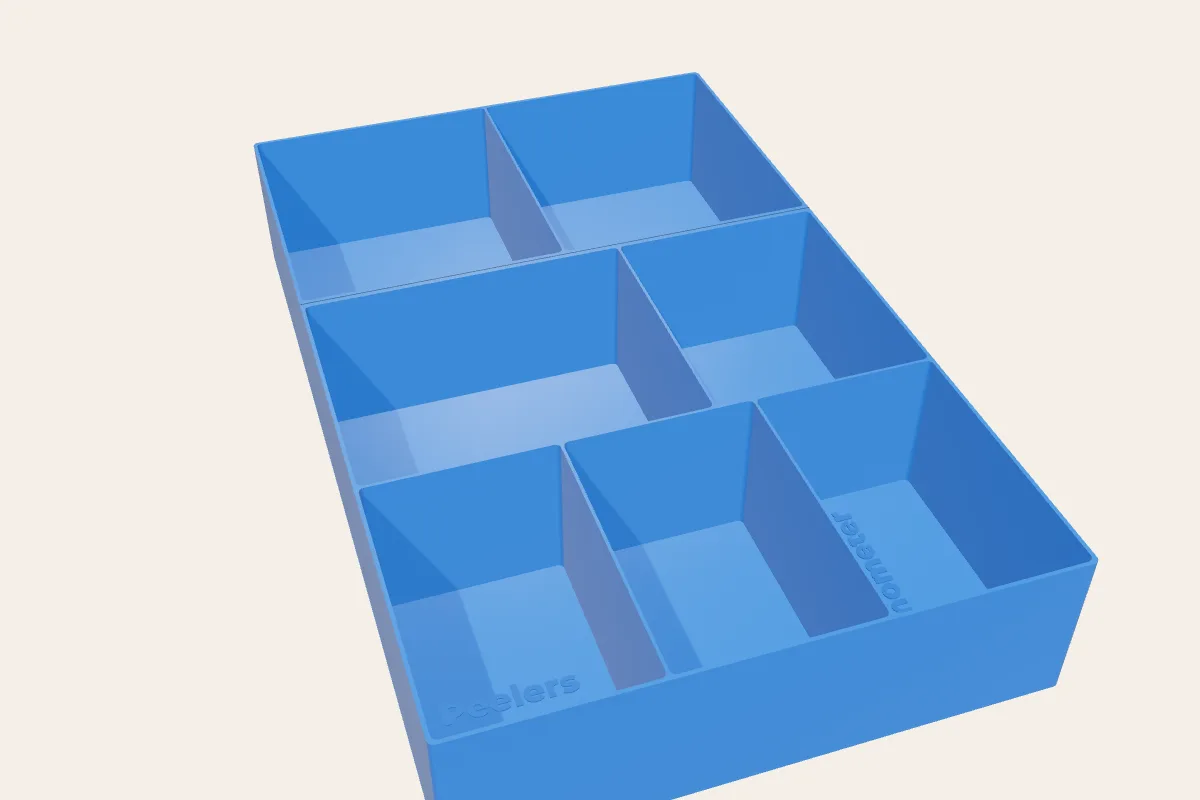
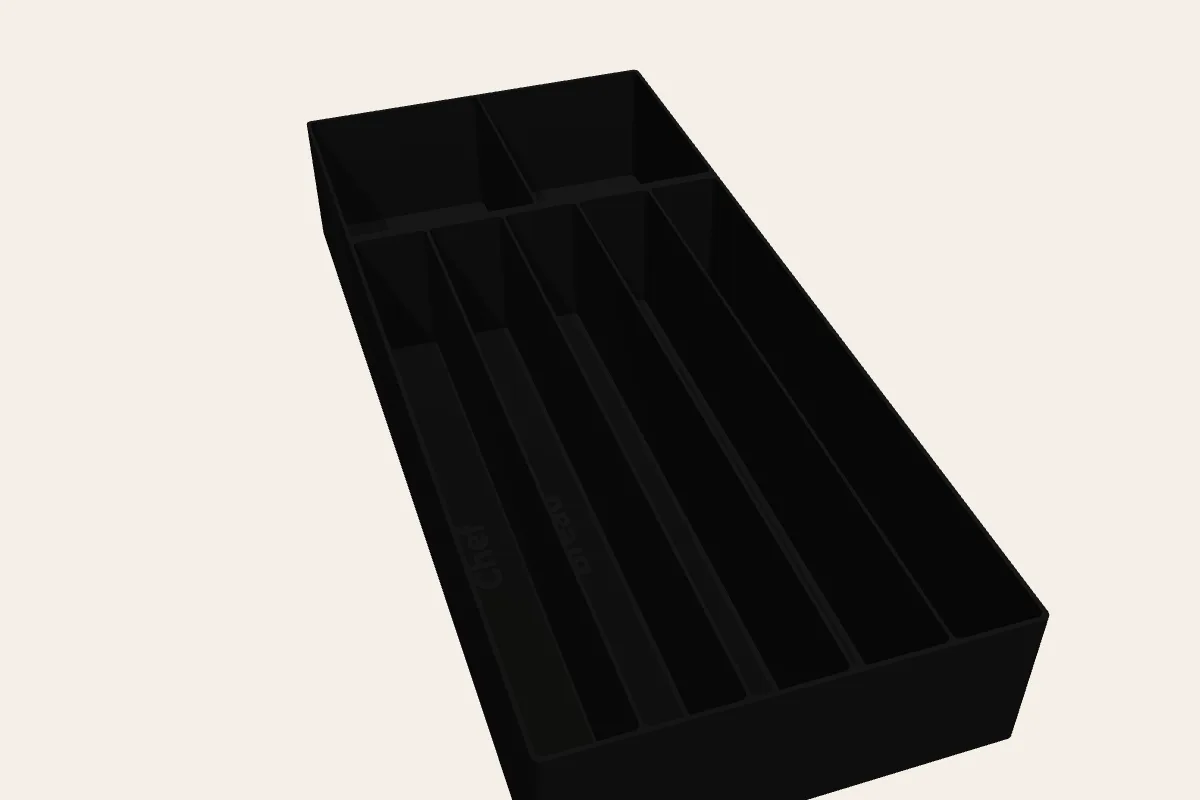
Bays sized for the tools you reach for: peelers, whisks, measuring cups.
Open this layout in the designer →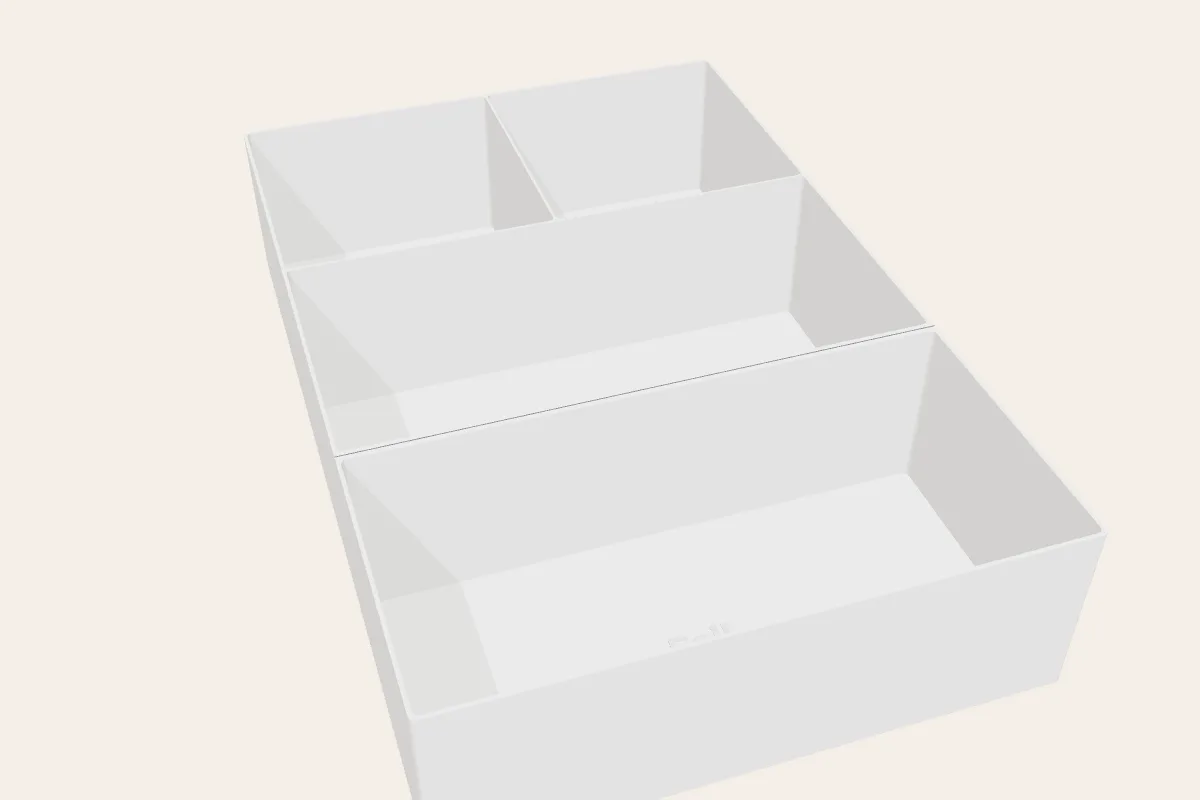
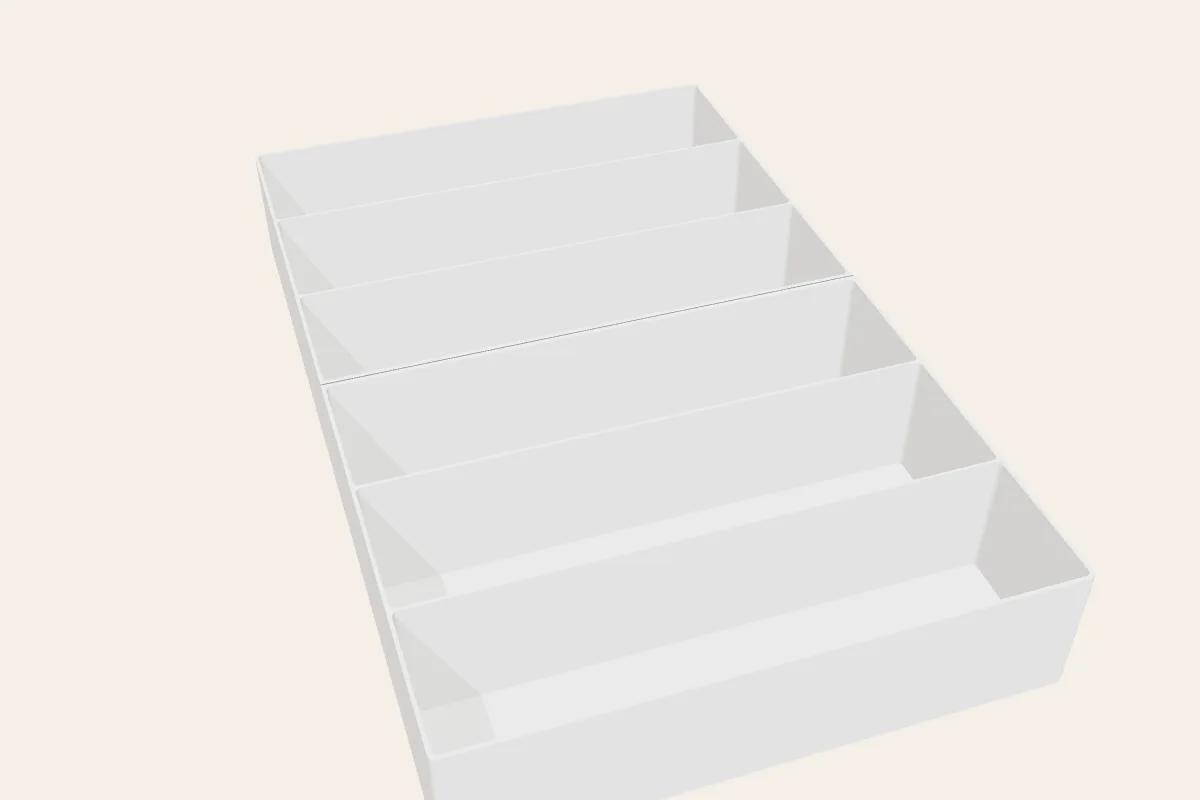
Front-to-back lanes for boxes of foil, wrap and bags.
Open this layout in the designer →US base cabinets are usually 24″ deep, so drawers are often 18–20″ deep inside. Width depends on the cabinet: a 15″ cabinet gives roughly 11–12″ inside, an 18″ cabinet about 14–15″. Top drawers are usually 3–4″ tall inside. Always measure your own drawer. These are just typical numbers.
One piece can be up to 13.1 × 12.4 inches. Deeper drawers are made in two pieces that lock together with a hidden dovetail joint inside one of the dividers, so the seam disappears into your layout.
Wash it by hand with warm, soapy water. A dishwasher's heated dry can soften the plastic.
Yes. Choose the corner style in the designer and the insert's corners will follow.
PETG. It's tough, flexes slightly instead of cracking, and handles heat better than PLA.
See your insert in 3D and get an exact price in a few minutes.